Pre-docking Decision Support

Cut the docking queue before it costs you weeks.

VOX reads peptide structure the way docking eventually will: 3D, charge-aware, receptor-framed - and tells you which candidates are worth the compute. Triage in minutes, not days.

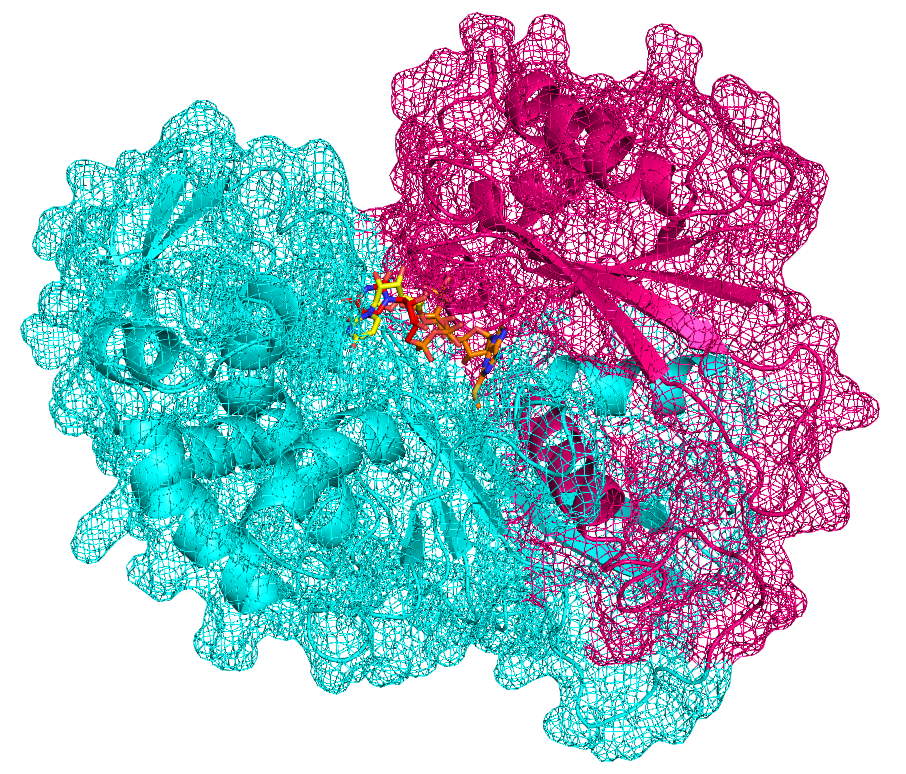
VOX voxel encoding - peptide structures rasterized into 3D charge-aware grids
Library → filter → shortlist → docking.

The bottleneck

Peptide libraries are big, docking budgets aren't. The decision of which candidates deserve a docking slot is usually made on intuition or a 1D score.

Search space

Candidate sets routinely run into the thousands. Full docking on all of them is rarely on the table.

Cost asymmetry

A single docking pass can take hours of compute. Picking the wrong 200 wastes the whole week.

Opaque ranking

Sequence-similarity heuristics ignore 3D shape and electrostatics - exactly what binding depends on.

Inside a VOX run

Each candidate is voxelized in a receptor-aware frame and scored against a reference. Below: a live comparison between the top-ranked and bottom-ranked peptide from a recent 2104-candidate batch; 3D shape coloured by partial charge, with a difference map highlighting where the good binder packs density that the bad binder doesn't.

batch: 2104 shape + charge receptor-aligned warm = best cool = worst
Voxel comparison between Rank 01 best-docking and Rank 38 worst-docking peptide, with charge-coloured 3D views and difference map
Rank 01 PASS
Rank 38 REJECT
Occupied voxels (best / worst) 6321 / 6361
Spatial spread (best / worst) 14.6 / 17.8
Radial density distribution for batch 2104
radial density - batch 2104

How it works

Four steps. No black box; every stage produces an artifact you can inspect.

1

Structure in

Drop in peptide structures (PDB / mol2). VOX handles batch ingestion and per-candidate validation.

2

Voxel encoding

Each structure is rasterized into a 3D grid with geometry and partial-charge channels, aligned to the receptor frame.

3

Receptor-aware scoring

Fast similarity scoring against reference binders, with subgroup-aware thresholds so one bad cohort doesn't poison the run.

4

Triage out

Three labels: pass, reject, uncertain. Uncertain cases are tagged, not silently dropped.

How we measure it

We don't report a single headline number. VOX is evaluated on a panel of subgroup gates - because a filter that works on average but fails on the cohort you actually care about is worse than no filter.

Separation

Score distributions for known positives vs negatives, per receptor subgroup.

Feasibility gates

High recall on positives and meaningful rejection of negatives; both required, not averaged.

Robustness reruns

Re-evaluation against larger and harder negative sets to check that gains hold under stress.

Underpowered-cohort flags

Min-sample diagnostics so we never claim performance on a subgroup too small to support it.